Nature & routes · 5 min read
Issyk-Kul Guide: North & South Shores, Karakol and the Canyons
Updated: · Kyrgyzstan Outdoor
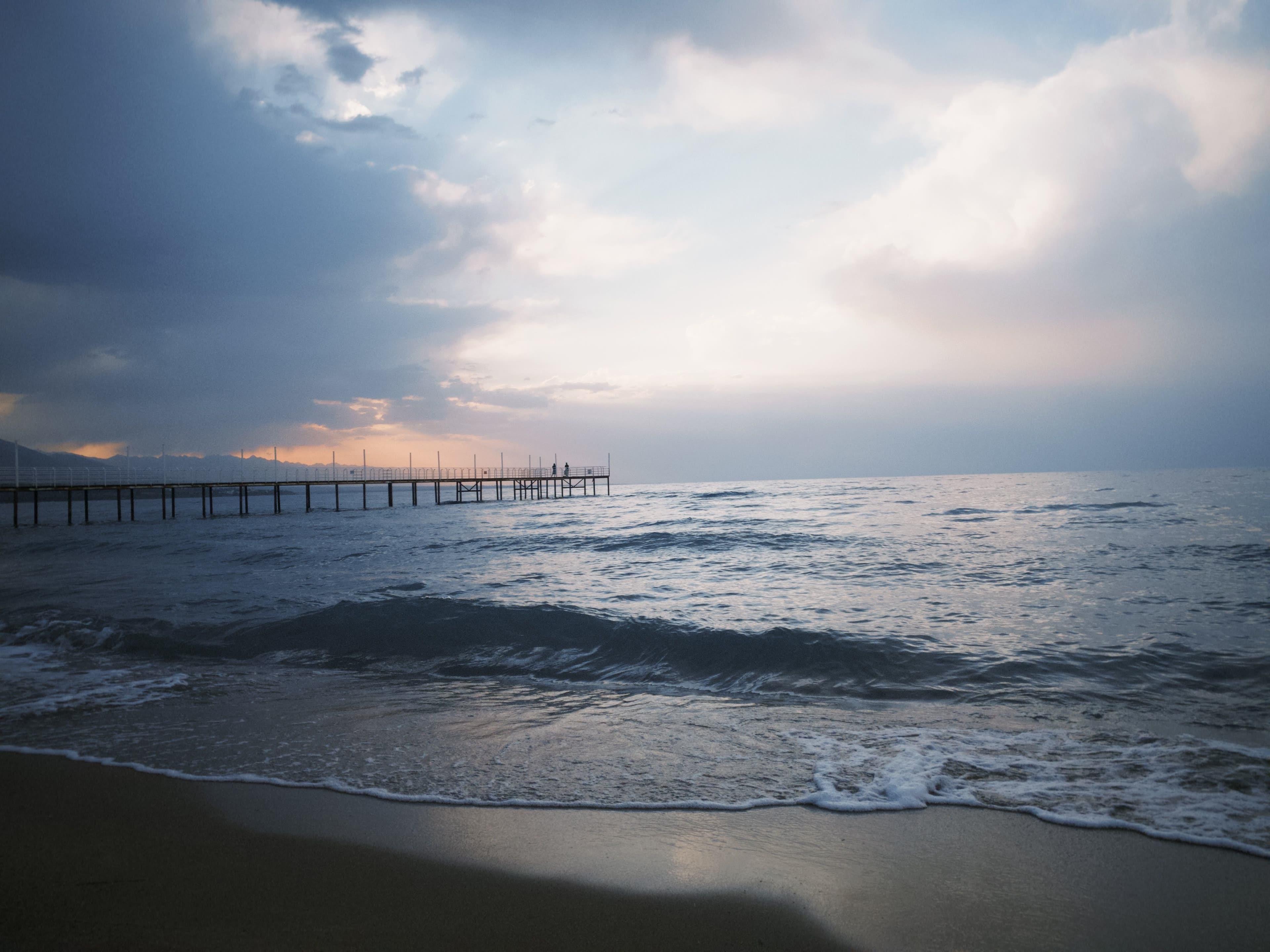
Issyk-Kul is one of the world's largest alpine lakes, lying at about 1,607 m in eastern Kyrgyzstan and stretching over 180 km. Being slightly saline, it never freezes. The north shore (Cholpon-Ata) has resorts and beaches; the south shore is known for Skazka Canyon, Jeti-Oguz and quiet villages. Karakol is the base for treks to Altyn-Arashan and Ala-Kul.
A sea in the mountains
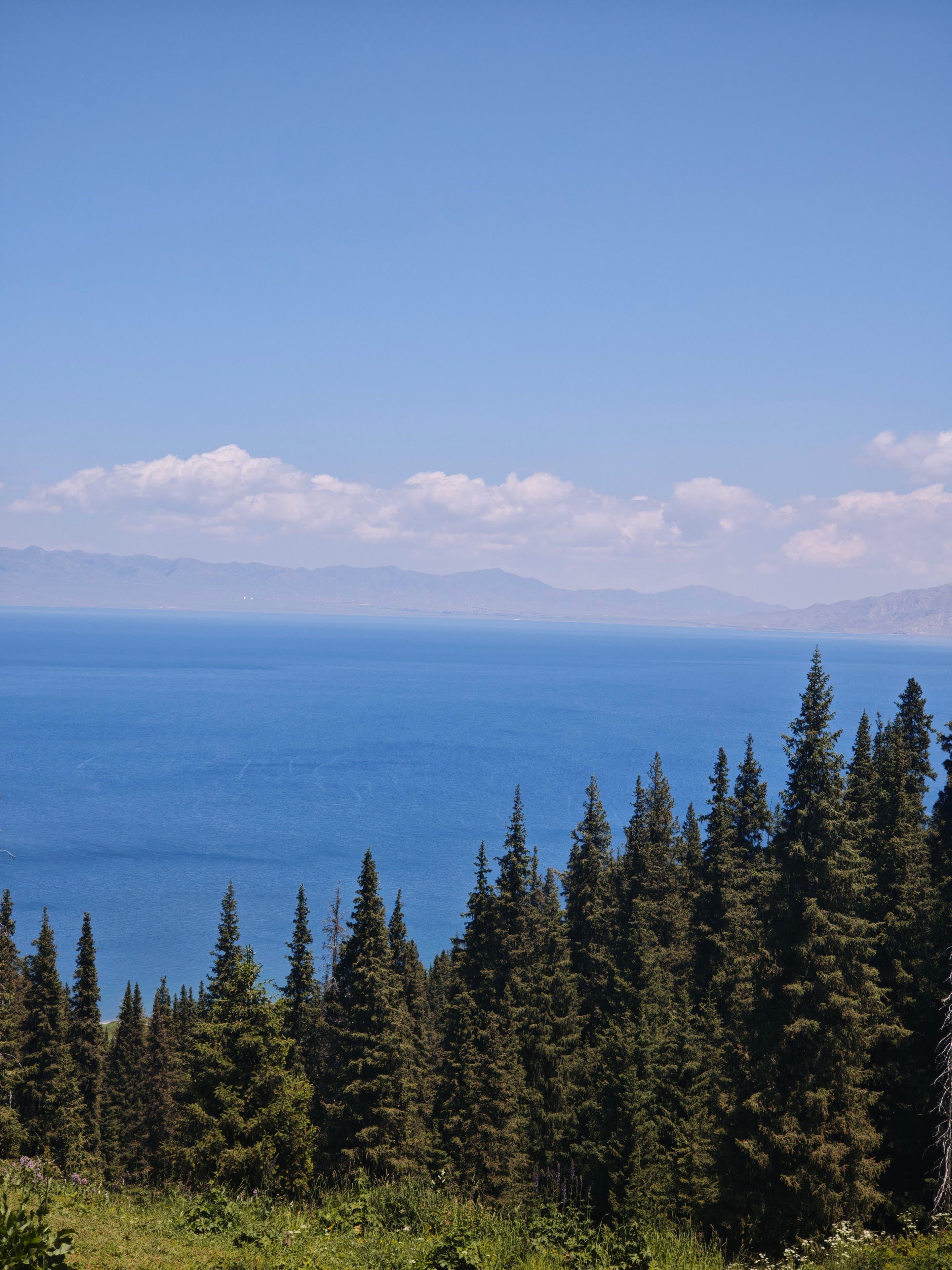
When you first see Issyk-Kul, it's hard to believe it's a lake. The far shore is often invisible, and all you see on the horizon are the tops of snowy mountains. The Kyrgyz don't call it "the Kyrgyz sea" for nothing.
The lake sits at about 1,607 m, is more than 180 km long and about 60 km wide, and is over 600 m deep at its deepest point. It's one of the largest alpine lakes in the world. Its name means "warm lake" in Kyrgyz, and there's a reason for that: thanks to its slightly saline water and great depth, Issyk-Kul never freezes. On a snowy January morning you can watch steam rising off the water.
You'll see it spelled Issyk-Kul, Issyk Kul, Ysyk-Köl or Иссык-Куль. It's all the same place.
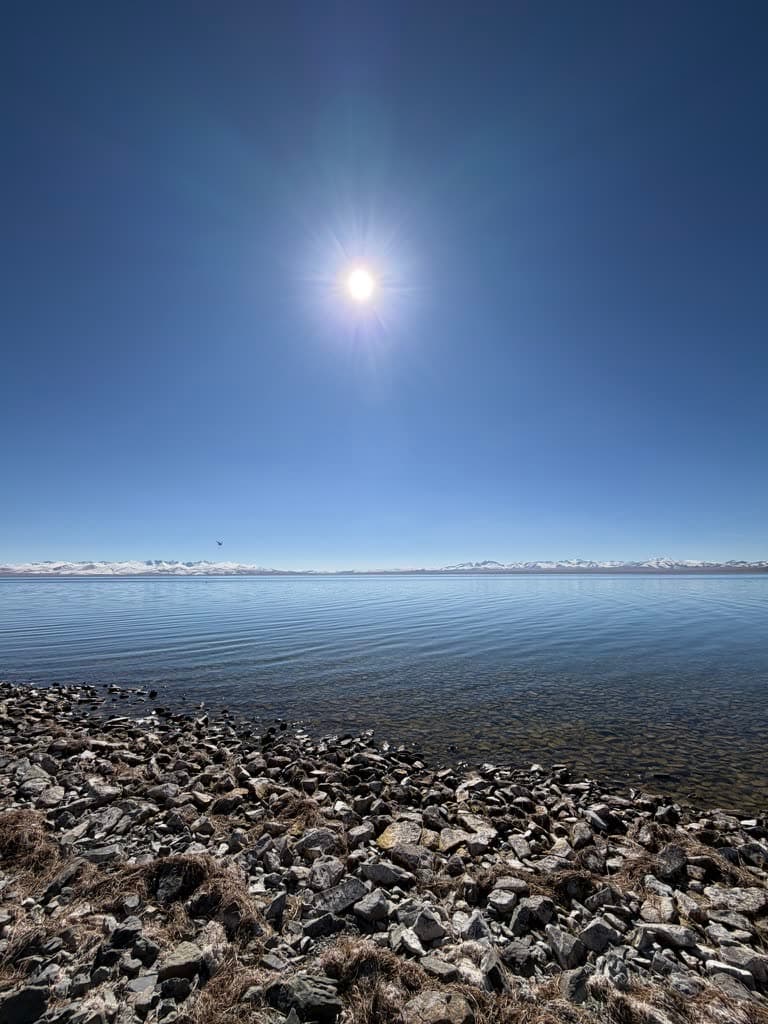 The lakeshore with the snowy Tien Shan beyond
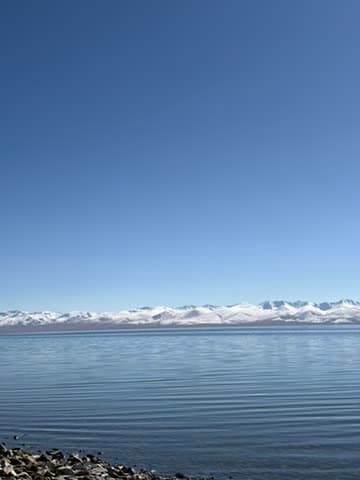 A pebbly shore and clear water
North shore or south shore?
The two shores of Issyk-Kul could hardly be more different, and which one you choose shapes your whole trip.
The north shore is the holiday side, with Soviet-era sanatoriums, new hotels, beaches and, in summer, crowds of visitors from Kazakhstan and Russia. Its centre is Cholpon-Ata. Just above the town is an open-air museum of petroglyphs: boulders carved thousands of years ago with ibex and hunting scenes. The Ruh Ordo cultural centre on the shore, with chapels of different faiths, is a pleasant short stop.
The south shore is far quieter. There are no big hotels, the villages are small and the roads are empty. The mountains behind the shore are closer and higher. If you're after nature and culture, you'll prefer the south, which is why most of our tours go that way.
Stops on the south shore
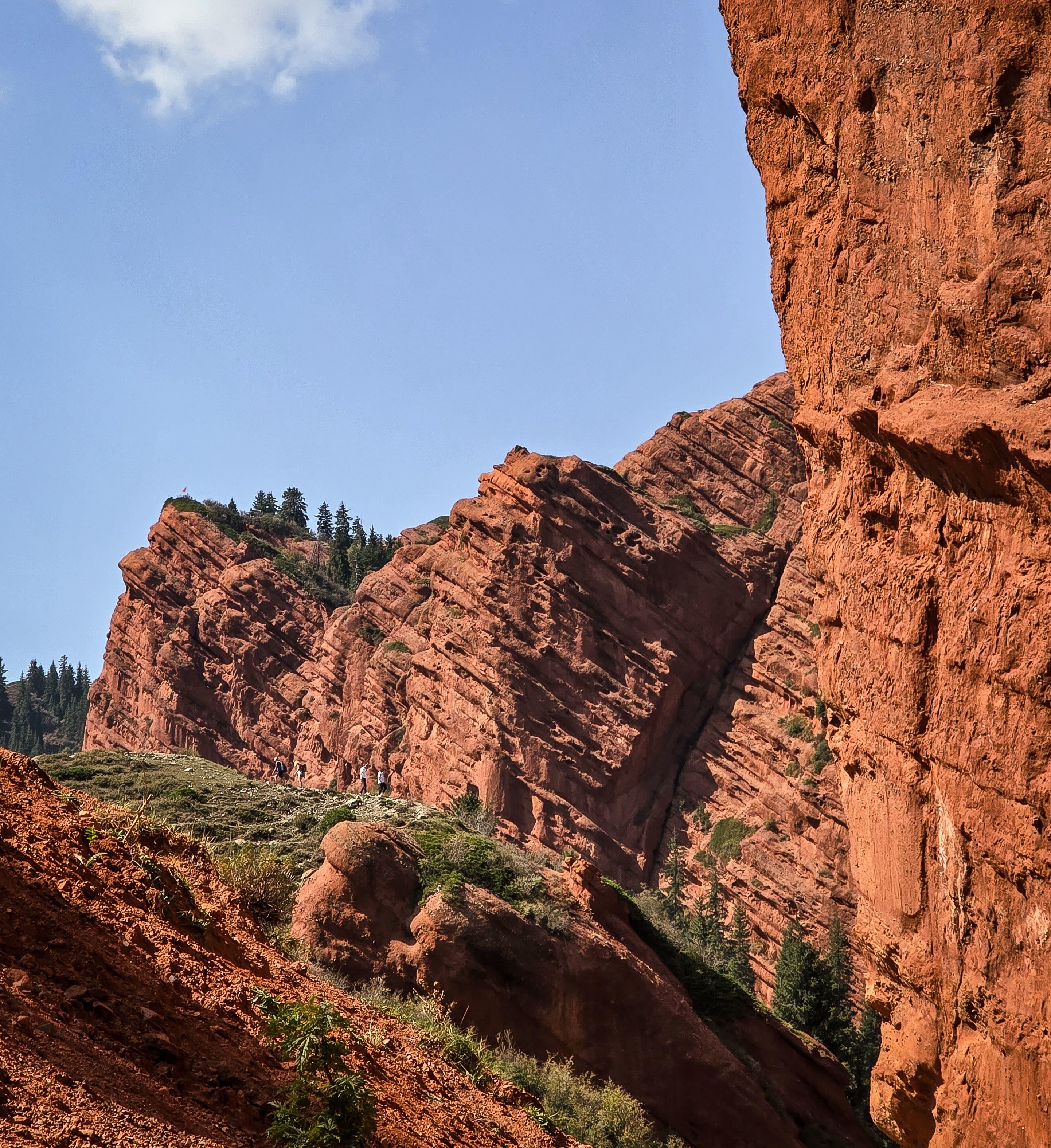
Skazka (Fairy Tale) Canyon. Red, orange and yellow rock formations carved by wind and rain over centuries. It's not big and can be explored in an hour or two, but in the soft evening light the colours change completely. Don't miss the viewpoint looking through the rocks to the lake.
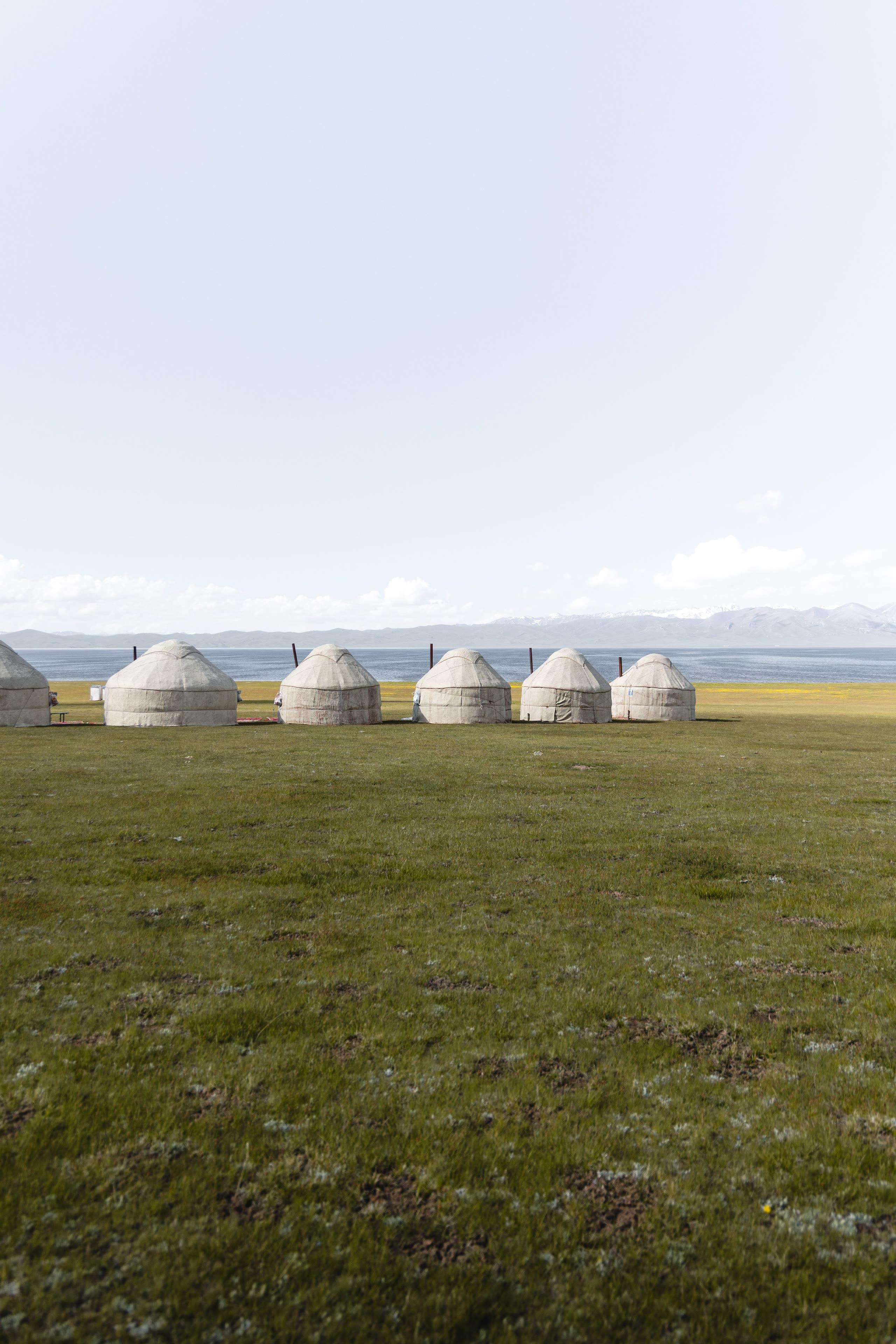
Bokonbaevo. The village known for its eagle hunters. Families who keep the tradition of hunting with golden eagles, called salbuurun, give demonstrations here. The moment an eagle lands on the hunter's arm is far more impressive than any photo. The lakeside yurt camps are in this area too.
Barskoon. A forested valley with tall waterfalls. Its name comes from the historic settlement of Barskhan, traditionally regarded as the home of the family of Mahmud al-Kashgari, the 11th-century author of the first dictionary of Turkic languages.
Jeti-Oguz. Red cliffs called the "Seven Bulls", and next to them a split rock known as "Broken Heart". Up the valley is Kok-Jaiyk, a green meadow among spruce forest where you can ride to a waterfall and where yurts go up on summer evenings.
Karakol: the eastern end
Karakol is the historic town at the eastern end of the lake and the gateway to the mountain routes around it. The town is small; two days is plenty.
Start with the Dungan Mosque, a colourful wooden mosque built in Chinese pagoda style without a single nail. A short walk away is the wooden Holy Trinity Cathedral. The walk between the two tells you a lot about Karakol as a meeting point of cultures.
The Russian explorer Nikolay Przhevalsky died here, and his grave and memorial by the lake can be visited. For a time the town was even called Przhevalsk.
And don't forget ashlan-fu, a cold, sour and spicy Dungan soup of starch jelly and noodles, served in small canteens around the bazaar. More in our Kyrgyz food guide.
In winter Karakol turns into a ski town, with the resort usually open from December to March.
Altyn-Arashan and Ala-Kul
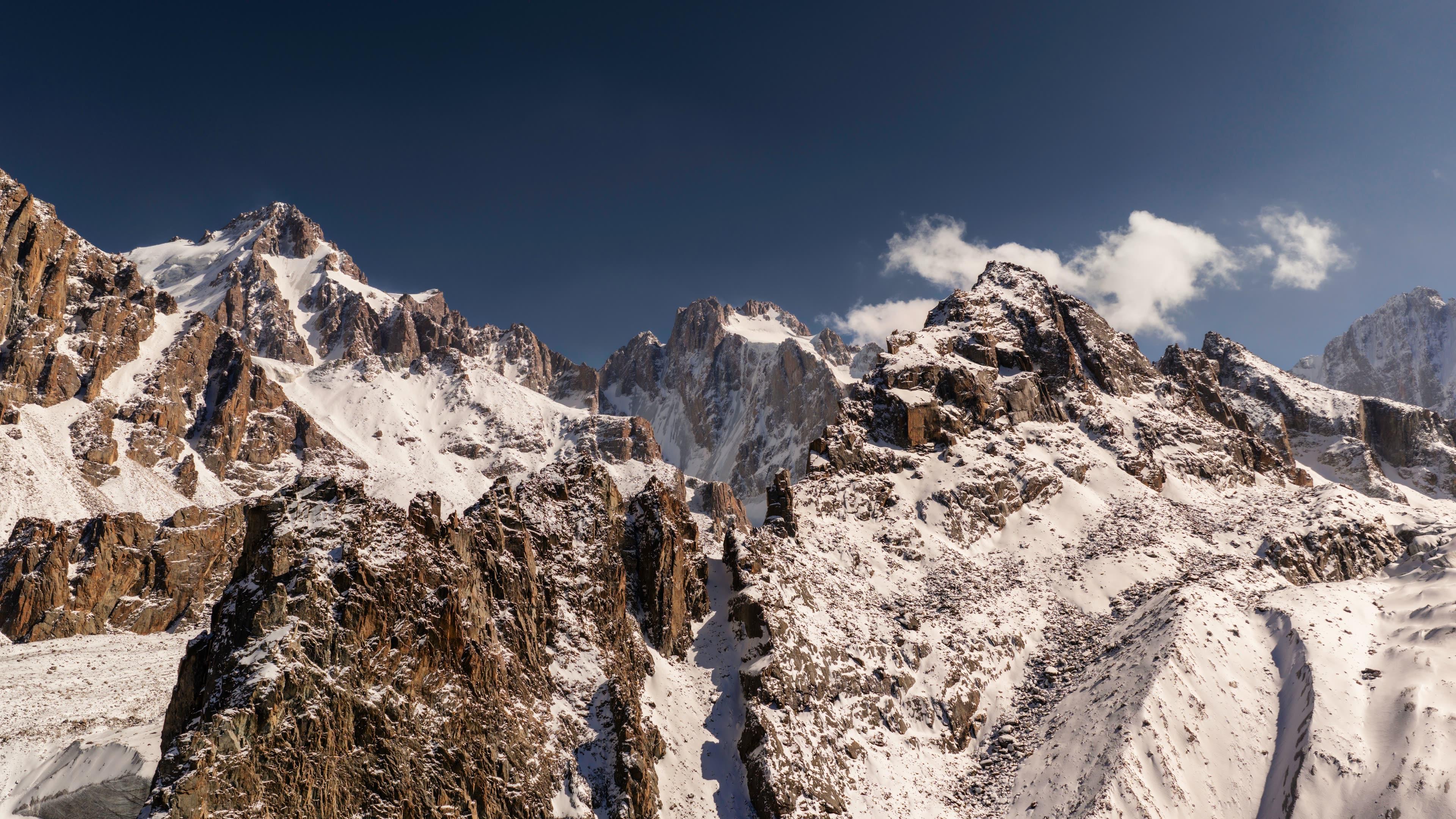
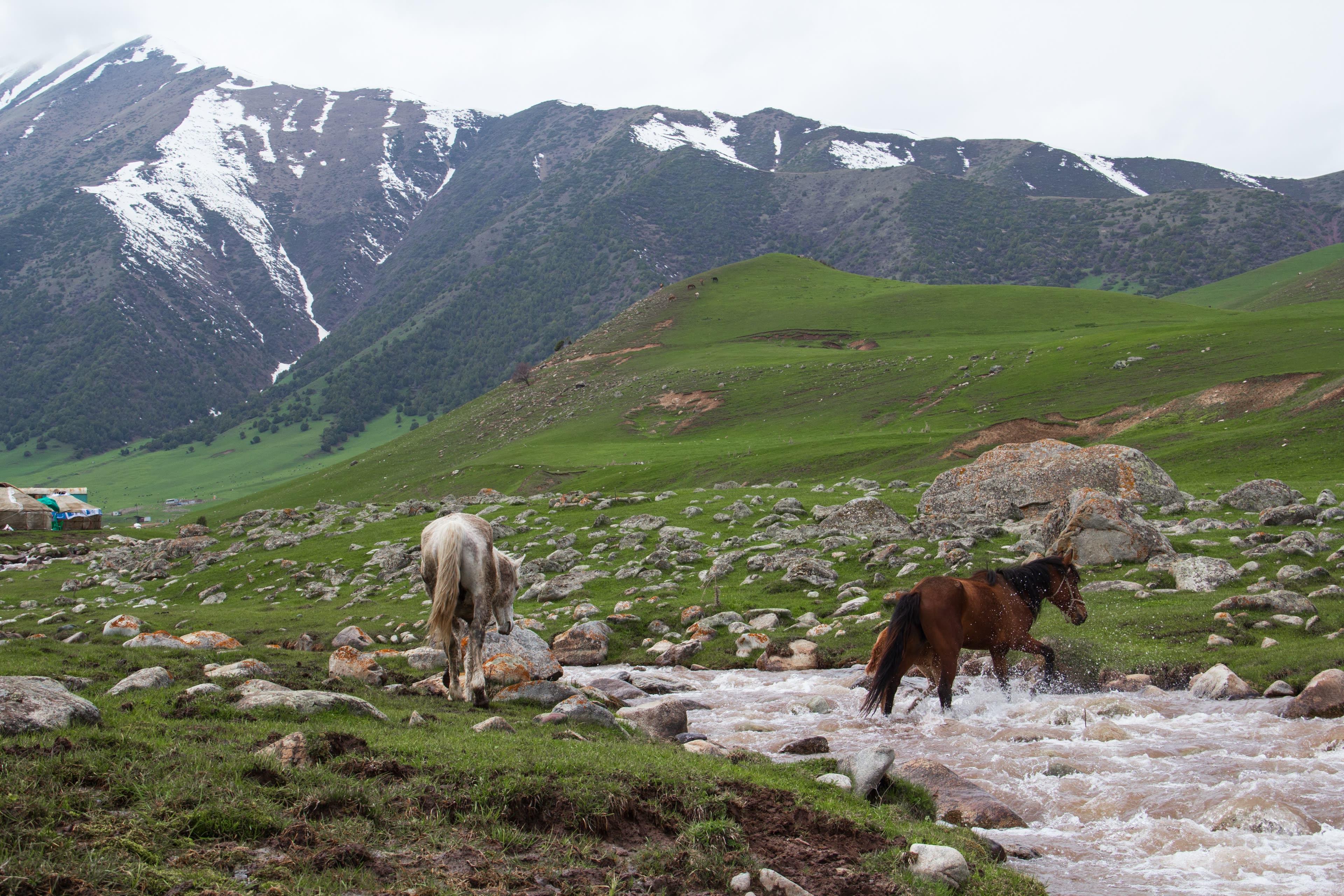
Right next to Karakol, the Altyn-Arashan valley is one of Kyrgyzstan's best-loved corners. You get there either by bouncing up the track in an old Soviet UAZ jeep or on a hike of a few hours. Up top are spruce forests, snowy peaks and natural hot spring pools. Slipping into hot water in mountain air after a long day is one of the great rewards of the trip.
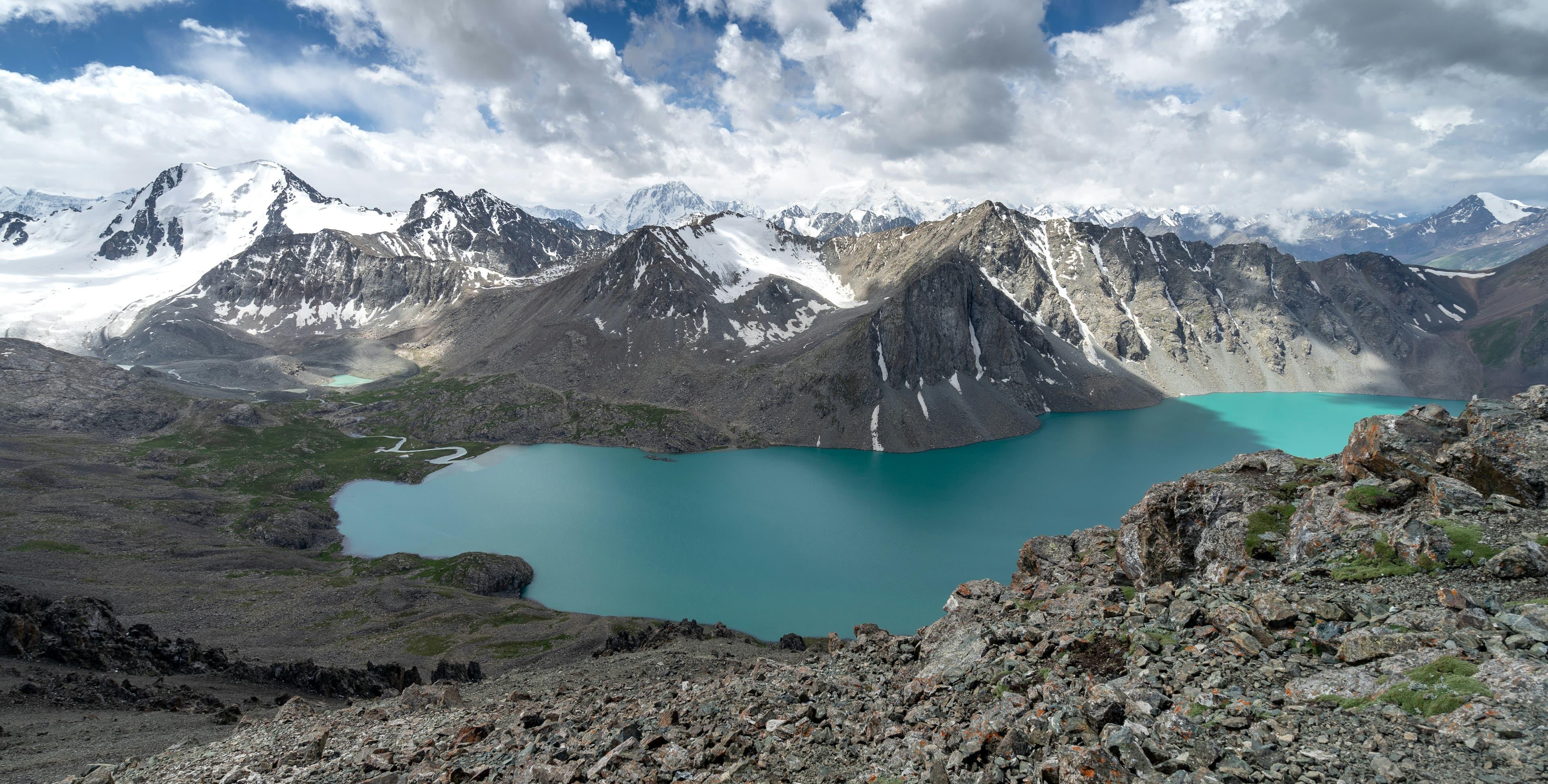
From here, hikes and horse treks lead to turquoise Ala-Kul at about 3,532 m and a pass at about 3,900 m. It's not an easy day, but looking down on the lake from the pass, you'll understand why the effort doesn't matter. More in our Tien Shan guide.
Can you swim in Issyk-Kul?
Yes, at the right time. In July and August the water is warm enough to swim. It's beautifully clear; "warm" would be generous, "refreshing" is more honest. The north shore has organised beaches with sunbeds; on the south shore it's easy to find your own cove.
Where to stay
On the north shore, especially in Cholpon-Ata, there's everything from resorts to boutique hotels, which is best for beach holidays with kids. On the south shore, accommodation is mostly yurt camps and guesthouses. Waking up in a yurt and opening the door onto Issyk-Kul stays with you far longer than any hotel room.
Karakol has boutique hotels and family-run guesthouses. In Altyn-Arashan there are simple mountain lodges and yurts. Don't expect comfort; the view and the hot springs make up for it.
How far is Issyk-Kul from Bishkek?
About four hours to Cholpon-Ata and six to seven hours to Karakol along the north shore. The south-shore route is longer but comes with canyons, villages and lake views. If you have time, we recommend going all the way around the lake: out one side and back the other is like seeing two different Issyk-Kuls.
Tours we recommend
Issyk-Kul & Mountains, which runs every month from April to November, covers the south shore, Karakol and Altyn-Arashan in five days. To combine Issyk-Kul with Son-Kul, Ala-Kul and Kel-Suu in summer, choose Ultimate Kyrgyzstan.
Frequently asked questions
Does Issyk-Kul freeze?
No. Because it is slightly saline and very deep, Issyk-Kul does not freeze in winter.
Can you swim in Issyk-Kul?
Yes, the water is warm enough to swim in July and August.
How far is Issyk-Kul from Bishkek?
About 4 hours to Cholpon-Ata and 6–7 hours to Karakol.